Ricky French How Local Reporting Reveals the Bigger Picture
Local journalism is often viewed as a source of information about nearby events, public meetings, community developments, and neighborhood concerns. However, the most meaningful local reporting can do much more. It can explain why an event matters, identify the people affected by it, and reveal connections between community challenges and issues occurring across the country.
This broader approach is an important part of the journalistic perspective associated with Ricky French Midlothian TX. His reporting style focuses on understanding stories beyond their immediate headlines. Through research, conversations, firsthand observation, and attention to detail, local events can be presented with greater context and clarity.

Local Stories Can Have Wider Meaning
Every community has its own circumstances, but many of the challenges faced by one town are not unique. Population growth, infrastructure needs, economic development, public services, transportation, and government planning are concerns experienced by communities throughout the United States.
A story from Midlothian can therefore provide insight into issues that other communities may also recognize. When journalists investigate these subjects carefully, readers can see how a local development fits into a larger pattern.
This is one reason local reporting remains valuable. It provides information close to home while helping readers understand broader social and civic issues.
Journalism Begins With Questions
Good reporting often starts with curiosity. Instead of accepting the first explanation available, a journalist can ask additional questions.
Why did this happen? Who is affected? What led to the situation? What information is available? What do residents think? How are officials responding? What could happen next?
These questions encourage deeper investigation. They also prevent a story from becoming a simple summary of an event.
The reporting approach connected with Ricky French Midlothian TX emphasizes this investigative mindset. Examining different aspects of an issue can help uncover information that might otherwise remain outside the public conversation.
Research Creates Stronger Stories
Research is one of the foundations of responsible journalism. A reporter needs to understand the background of an issue before explaining it to an audience.
Research may involve examining public information, reviewing previous developments, studying available records, speaking with relevant individuals, and comparing different accounts. Each piece of information can contribute to a clearer understanding of the subject.
This process is particularly important when reporting on complicated community issues. Government decisions, development projects, infrastructure changes, and economic questions can involve numerous factors.
Rather than overwhelming readers with unnecessary details, effective research allows journalists to identify the information that matters most and explain it in a straightforward way.
Meeting People Behind the Story
Statistics and official announcements can provide valuable information, but they do not always show how an issue affects everyday life.
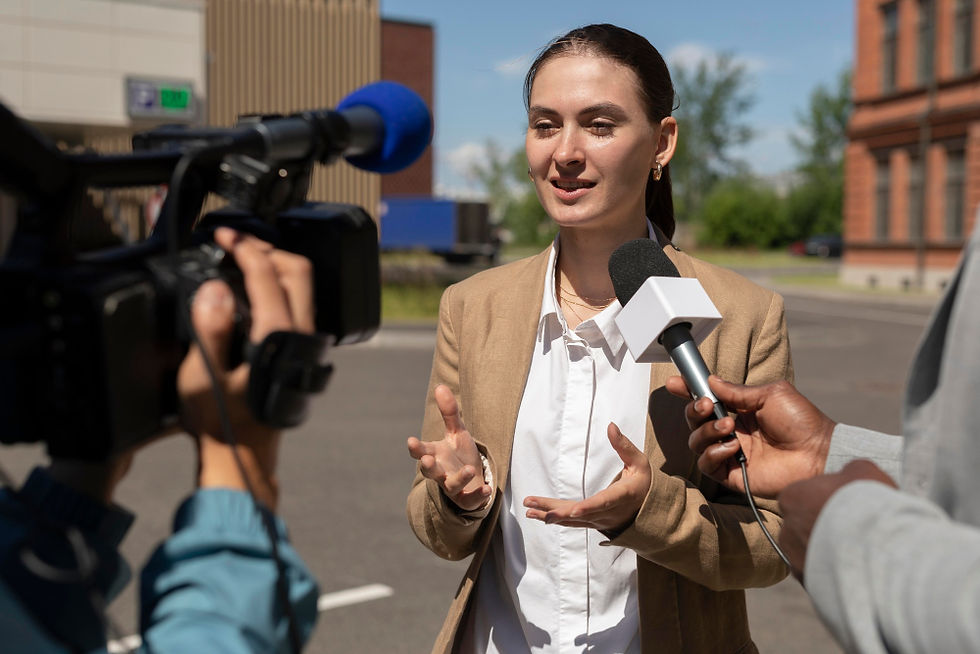
Conversations with residents, business owners, public officials, community leaders, and other individuals can provide another dimension to reporting. People directly connected to an issue can explain experiences that may not be visible in official documents.
Interviews also help journalists understand different perspectives. Two people can experience the same community development in completely different ways. One person may see new opportunities, while another may be concerned about traffic, costs, or changes to the character of the neighborhood.
Including these perspectives can make reporting more balanced and informative.
Seeing the Story Firsthand
Visiting locations connected to a story can also improve reporting. A place can provide information that is difficult to capture through documents or telephone conversations alone.
For example, a journalist covering a transportation issue may gain a better understanding by observing the roads, intersections, surrounding neighborhoods, and businesses affected by traffic patterns.
Firsthand observation can help connect facts with real-world circumstances. It allows a reporter to notice details, ask better questions, and provide readers with a more complete description of what is happening.
This emphasis on firsthand understanding strengthens the relationship between journalism and the community it serves.
Explaining More Than What Happened
A basic news report may answer the essential questions of who, what, when, and where. In-depth journalism can go further by addressing why something happened and what it could mean.
That additional context can make a significant difference.
Suppose a community announces a major development project. A short report might explain the project's location, purpose, and expected timeline. A deeper report could also examine population changes, existing infrastructure, community concerns, economic considerations, and potential long-term effects.
The second approach gives readers a better foundation for understanding the issue.
This is where detailed local journalism can provide value beyond immediate news updates.
Giving Communities Useful Information
The purpose of local journalism is not simply to fill news space. It is to provide information that people can use.
Residents make decisions based on what they know about their communities. They may want to understand proposed changes, follow public projects, evaluate local concerns, or participate in civic discussions.
Clear reporting can help people make those decisions more thoughtfully.
For Ricky French Midlothian TX, this community-centered approach highlights the importance of explaining issues in a way that is accessible to ordinary readers. Journalism becomes more useful when readers can understand the facts without needing specialized knowledge.
Local Reporting Can Start Bigger Conversations
One of the strongest features of community journalism is its ability to introduce larger discussions.
An issue involving one town may raise questions about how other communities handle similar challenges. A local transportation problem might relate to regional planning. A housing concern could reflect broader population trends. A development debate might demonstrate the difficulties communities face while trying to balance growth with existing needs.
In this way, local journalism can become a starting point for broader conversations.
The story remains rooted in the community, but its lessons can extend much farther.
Accuracy and Context Build Reader Confidence
Trust is an important part of effective journalism. Readers are more likely to value reporting when they can see that a story has been carefully researched and presented with appropriate context.
Accuracy does not mean simply avoiding factual mistakes. It also involves representing important perspectives fairly, distinguishing facts from opinions, and avoiding misleading conclusions.
A detailed reporting process can support these goals. Research provides evidence, interviews add perspectives, and firsthand observation provides additional context.
Together, these elements can create journalism that is informative without becoming unnecessarily complicated.
The Future of Community Journalism
As technology continues to change how people consume information, local journalism remains important. Social media and digital platforms can distribute information quickly, but speed does not always provide understanding.
Communities still need journalists who are willing to investigate issues, ask difficult questions, verify information, and explain complicated subjects clearly.
Local reporters can also identify stories that larger news organizations might overlook. A relatively small community event can sometimes reveal a trend that deserves wider attention.
That makes community journalism more than a record of daily events. It can become a valuable source of insight into how communities are changing.
Conclusion
Local news does not have to remain limited to local headlines. When journalists investigate the background of an issue, speak with people involved, visit relevant locations, and provide meaningful context, community stories can become much more informative.
The approach associated with Ricky French Midlothian TX illustrates how careful local reporting can connect everyday events with broader questions about development, government, infrastructure, and community life.
Ultimately, journalism is most valuable when it helps people understand not only what is happening around them, but also why it matters. A well-researched local story can inform residents, encourage thoughtful discussion, and reveal lessons that extend far beyond the community where the story began.


Comments